Battery Backup Sump Pump Choices for Bexley OH Homes
When a spring storm knocks out power across Franklin County and rain is pouring into your window wells, your primary sump pump becomes useless the moment the lights go out. For Bexley homeowners, that scenario is not hypothetical. The tree canopy along Drexel Avenue and throughout the older neighborhoods means downed lines are a regular occurrence during severe weather — the same storms that send groundwater rising fastest. A battery backup sump pump is not a luxury accessory for Bexley basements. It is the difference between a dry morning and a costly cleanup.
How Battery Backup Sump Pumps Work
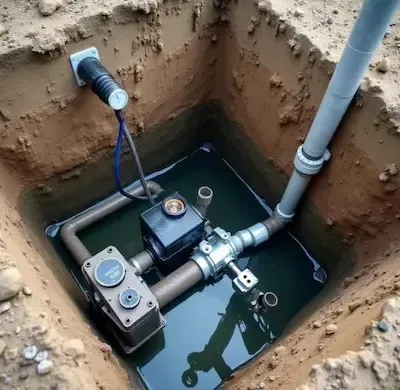
A battery backup unit sits beside or above your primary pump in the sump pit and connects to a deep-cycle marine or AGM battery. Under normal conditions the battery stays on a trickle charger. The moment power fails — or the primary pump is overwhelmed — the backup unit activates automatically. It draws from stored battery power to move water out of the pit and through either the existing discharge line or a dedicated secondary pipe routed to daylight.
The backup controller constantly monitors the float switch. If water rises past the primary pump's activation point, the backup engages whether power is on or off. This dual-activation feature matters in Bexley because older storm infrastructure can be overwhelmed by a heavy rain event even when electricity is running fine.
Battery Types and What to Expect in a Franklin County Outage
Runtime is the number homeowners ask about most, and the honest answer depends on three variables: battery capacity, how frequently the pump cycles, and how much water is entering the pit per hour.
- Standard 75 Ah AGM battery: Expect roughly 5 to 7 hours of moderate cycling before capacity drops below safe operating voltage. In a heavy-inflow event, that window narrows to 3 to 4 hours.
- High-capacity 100 to 115 Ah AGM battery: Extends runtime to 8 to 12 hours under moderate conditions. This is the more appropriate starting point for Bexley's clay-heavy soil, which retains water and feeds pits long after a storm passes.
- Lithium-ion battery systems: Newer units using lithium technology hold charge longer between use cycles and tolerate more discharge-recharge cycles before degradation. They cost more upfront but tend to outlast two or three AGM batteries over the life of the system.
Franklin County storm outages during spring months frequently last 6 to 18 hours. Sizing your backup battery conservatively — meaning larger than you think you need — is the correct approach for homes on the east side of Columbus where the terrain slopes toward Alum Creek and subsurface water moves quickly.
Choosing a System for Pre-War Bexley Basements
Many homes in Bexley were built between 1910 and 1945. The basements in these properties come with characteristics that affect backup pump selection and installation in ways that newer construction does not.
- Crock-style pits: Older homes often have a clay crock or a narrow poured concrete pit rather than a modern plastic basin. These pits may not accommodate a full-size backup unit alongside the primary pump. A pedestal-style backup pump, which mounts above the water line on a post, fits narrow pits where a submersible unit cannot.
- Limited electrical access: Pre-war basements frequently have older panel configurations and limited outlet placement near the pit. Your backup system needs a dedicated outlet within reach of its power cord, and the charger needs reliable access to a circuit that won't trip under load.
- Low ceiling clearance: Some Bexley basements have ceiling heights under 7 feet. Pedestal pumps and battery cabinets need vertical clearance. Measure before selecting a unit.
- Original drain tile systems: Homes from this era sometimes rely on original clay tile drain systems that channel water toward the pit. These tiles can crack or shift over decades, affecting inflow volume and inflow consistency in ways that make it harder to predict pump cycling frequency.
If you are uncertain whether your pit can accommodate a standard backup system, a professional assessment before purchasing equipment saves you from returning a unit or retrofitting a basin. Read more in the Bexley basement sump primer for a thorough overview of how Bexley's groundwater conditions interact with your existing system.
Pump Capacity and Gallons Per Hour
Battery backup pumps are rated in gallons per hour at a given head height — meaning the vertical distance water must travel from the pit to the discharge point outside the house. Bexley homes with basements that sit 6 to 8 feet below grade typically require pumps rated at no less than 1,000 to 1,200 gallons per hour at 10 feet of head. Units marketed as budget options often rate their capacity at 0 feet of head, which inflates the number significantly. Always compare specifications at the head height that matches your actual installation.
Maintenance Requirements That Bexley Homeowners Often Skip
A backup pump that has not been tested in 18 months may not run when you need it. Battery backup systems require routine attention that is easy to overlook because the unit is out of sight and the primary pump handles every normal event.
- Test the backup unit manually every 6 months by lifting the float or disconnecting the primary pump momentarily.
- Check battery voltage and charge level annually. Most controllers display a warning light when the battery is underperforming, but not all homeowners notice the indicator.
- Replace AGM batteries every 3 to 5 years regardless of apparent condition. A battery that holds charge on the charger may fail under the sustained load of a real event.
- Inspect discharge connections to confirm the backup unit routes to a clear path and that no joint has loosened since the last inspection.
When to Call a Plumber Instead of Installing It Yourself
Backup sump pump kits are sold at home improvement stores with packaging that implies straightforward installation. In a newer home with a properly sized plastic basin, a standard electrical outlet nearby, and a clear discharge route, DIY installation is reasonable for someone comfortable with basic plumbing connections. In a pre-war Bexley home with a narrow crock pit, aging drain tile, and limited electrical access, the variables multiply quickly. An incorrect installation that fails during a storm causes the same damage as having no backup at all.
For proper sizing, correct discharge routing, and pit assessment in Bexley's older housing stock, professional Sump Pump Repair service ensures the system is matched to your home's specific conditions before the next Franklin County storm season arrives.
Making the Right Choice for Your Home
The best battery backup sump pump for your Bexley home is not necessarily the most powerful unit or the least expensive option — it is the one sized correctly for your pit, your typical inflow rate, and the outage durations common in your part of Franklin County. Start with an honest assessment of your basement's physical constraints, choose a battery capacity that covers at least 10 to 12 hours of moderate cycling, and build a maintenance schedule into your calendar. Bexley's clay soil and aging infrastructure mean groundwater pressure during storms is real and predictable. The preparation should be too.
