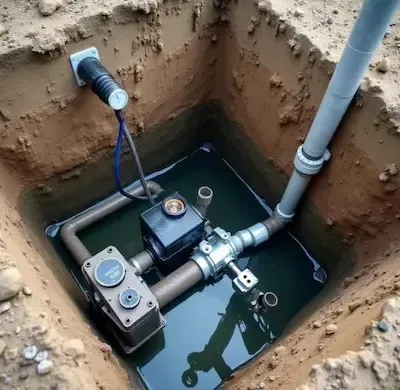
Storm Season Sump Pump Failures in Bexley OH Basements
Central Ohio storms don't give much warning. A line of thunderstorms can roll through Bexley on a Tuesday afternoon, drop two inches of rain in under an hour, and leave homeowners staring at a flooded basement before the thunder fades. The culprit in most of those situations isn't poor waterproofing or a cracked foundation wall — it's a sump pump that failed exactly when it was needed most. Understanding why storm season creates such concentrated stress on these systems is the first step toward making sure yours doesn't become another casualty.
Why Storm Season Is Different for Sump Pumps
During dry months, your sump pump might cycle a handful of times per week, or not at all. It's a low-demand appliance. Storm season changes that equation completely. When heavy rain saturates the clay-heavy soils common throughout Bexley and the broader Columbus area, groundwater rises fast and hydrostatic pressure against your foundation climbs with it. Your sump pump can go from near-dormant to running continuously within minutes of a storm hitting.
That sudden shift from idle to full demand is where failures concentrate. A pump that's been sitting largely unused through a mild spring may have a float switch that's stuck, a check valve that's seized, or a motor that's borderline on capacity. None of those problems reveal themselves until the pump is asked to perform under real load. By then, the water is already rising.
The Most Common Storm-Season Failure Points
Knowing which components fail most often during heavy rain events helps you prioritize what to inspect before storm season peaks in late spring and early summer in central Ohio.
Float switch malfunction: The float is what signals your pump to turn on. Debris in the pit, a twisted tether, or corrosion can cause the float to stick low and never trigger the pump — or stick high and run the motor dry.
Overwhelmed pump capacity: If your home's drainage load has increased — a new addition, regraded landscaping, or a neighbor's runoff now directed toward your yard — your existing pump may simply not move water fast enough during intense storms.
Power loss during the storm: This is the most dangerous scenario for Bexley homeowners. Thunderstorms that overwhelm sump pumps are often the same storms that knock out power. A pump that runs on grid electricity alone goes completely offline the moment the power does.
Clogged discharge line: The pipe that carries water away from your home can freeze in late winter, become blocked by debris, or be improperly terminated in a way that allows water to flow back. During heavy volume events, a partial blockage that was manageable before becomes a full failure.
Burned-out motor: Continuous cycling during extended rain events pushes motors past their duty cycle. Older pumps with motors that are already worn are at highest risk of burning out mid-storm.
Warning Signs Before the Storm Hits
Most sump pump failures during storm season aren't sudden surprises — they're events that were telegraphed weeks or months in advance. The problem is that the signals are easy to ignore when the pit is dry and the weather is calm.
Listen for unusual sounds when the pump cycles. A grinding or rattling noise points to impeller damage or debris caught in the intake. A pump that runs for an unusually long time before shutting off may be losing efficiency or working against a partial discharge blockage. If you notice the pump cycling on and off rapidly without apparent cause, the float switch or pressure sensor may already be compromised.
Visible rust, corrosion on the motor housing, or standing water in the pit that never fully drains are also warning indicators. Any of these signs warrant a closer look before the next storm — not after it. For more context on how these symptoms fit into broader pump health, read our Bexley sump pump overview for a full breakdown of what to watch for year-round.
Backup Power Options Worth Knowing
If there's one upgrade that provides disproportionate protection for Bexley homeowners, it's a battery backup sump pump system. These units sit alongside your primary pump in the pit and activate automatically when the main pump fails or the power goes out. A quality battery backup can pump thousands of gallons on a single charge — enough to keep a basement dry through most power outage scenarios in central Ohio.
Water-powered backup pumps are another option for homes with adequate municipal water pressure. They use the venturi effect to draw pit water out without any electricity at all. They're less powerful than battery backups in raw volume but have effectively unlimited runtime and no battery to maintain.
For homes in lower-lying sections of Bexley near Alum Creek or in neighborhoods with older drainage infrastructure, a dual-pump setup — primary plus battery backup — is often the most practical investment given how frequently those areas see prolonged groundwater elevation after storms.
When Same-Day Service Makes Sense
Sump pump problems during active storm season have a short window for intervention. If your pump is showing failure signs on a Wednesday and a storm system is forecast for Thursday night, waiting until the following week for a service call is a gamble most homeowners in Bexley shouldn't take. The cost of a failed pump is almost always higher than the cost of the repair or replacement itself — flooring, drywall, stored belongings, and in some cases structural remediation all come into play.
Same-day Sump Pump Repair exists precisely for this window. Whether the issue is a failed float switch, a burned-out motor, a blocked discharge line, or a pump that's simply past its service life, a timely repair before the next storm hits is the outcome worth prioritizing.
A Practical Approach to Storm Season Readiness
The homeowners who come through Ohio storm season with dry basements are usually the ones who checked their sump pump in April, not the ones who remembered to check it in July after the water was already on the floor. Test your pump manually by pouring water into the pit and watching the float trigger. Inspect the discharge line outlet to confirm it's clear and properly positioned. Note how old your pump is — most residential units have a practical lifespan of seven to ten years, and anything approaching that range deserves scrutiny before peak season.
Bexley's combination of older housing stock, mature trees that contribute root and debris pressure to drainage systems, and its position in central Ohio's storm corridor makes proactive sump pump maintenance more than just good advice. It's the difference between a normal spring and a very expensive one.
