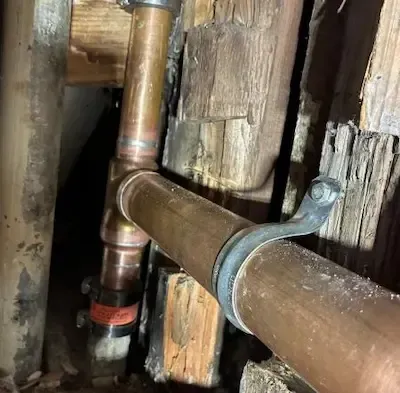
Galvanized to PEX Repipe Path for Bexley OH Historic Homes
Bexley's residential streets—lined with Tudor revivals, Colonial foursquares, and brick Craftsman bungalows built between the 1920s and 1950s—carry a particular plumbing challenge underneath their plaster walls. The galvanized steel pipe that was standard in those decades has a functional lifespan of roughly 40 to 70 years. Most of it is well past that window. If you live in one of these homes and you've noticed rust-tinted water at the tap, a gradual drop in shower pressure, or pinhole leaks appearing in sequence, those are the system telling you it's time. A galvanized to PEX repipe is the modern answer, and the path through a Bexley historic home requires planning that generic repipe guides rarely address.
Why Galvanized Pipe Fails the Way It Does
Galvanized pipe is steel coated in zinc. The zinc layer protects against corrosion initially, but over decades it oxidizes and flakes away from the inside outward. What remains is a narrowing steel bore coated with rust scale. The first symptom most homeowners notice is reduced flow—what used to be a strong kitchen faucet becomes a trickle. That restriction is mineral and rust buildup literally choking the pipe from the inside.
The second and more damaging symptom is water quality. When scale breaks loose, it enters the supply line. You'll see orange or brown discoloration, especially after the water has been sitting overnight. Fixtures and appliances that filter or heat water—water heaters, dishwashers, refrigerator ice makers—collect that debris in their inlet screens and degrade faster as a result.
The third symptom arrives without warning: a leak. Corroded pipe walls develop pinholes, and in a plaster-wall home, those leaks often go undetected until there's staining on a ceiling or a wet spot spreading beneath baseboard trim. By that point, the water damage compounds the cost of the repipe itself.
What Makes Bexley Historic Homes Different
Standard repipe work in a postwar tract home typically means drywall access—cut, replace pipe, patch drywall. Bexley homes built before 1955 overwhelmingly use plaster over wood lath. That construction is more durable and acoustically superior to drywall, but it complicates access for any trade work behind walls.
Plaster cannot simply be cut and patched with drywall compound. A quality repair requires a skilled plasterer, and matching the existing texture—whether it's a sand finish, a skip trowel, or a smooth lime coat—takes time. This isn't a reason to avoid the repipe. It's a reason to sequence it thoughtfully so you're only opening walls once and in the locations that matter most.
Many Bexley properties also carry restrictions tied to the city's design review guidelines or individual historic preservation considerations. If your home falls under those guidelines, confirm with the city before any work begins whether permits require review beyond the standard plumbing permit. Most interior plumbing replacements don't trigger design review, but it's worth verifying rather than discovering it mid-project.
How PEX Changes the Access Equation
Cross-linked polyethylene—PEX—is the material that makes a modern repipe in an older home viable. Unlike rigid copper or CPVC, PEX is flexible. A plumber can route it through existing wall cavities, around framing, and through floor joists with far fewer access points than rigid pipe would require. In practice, this means fewer plaster cuts per room and a smaller overall repair footprint.
PEX is also resistant to freeze cracking, corrosion-proof, and quieter in operation than rigid metal pipe. For a Bexley home that may already have experienced at least one frozen pipe winter, that freeze resistance matters. The material has been used in residential supply systems for over 30 years and carries long-term performance data to back up the manufacturer warranties.
The tradeoff is that PEX cannot be used for gas lines and requires specific fittings at connections to fixtures. Those fittings must be installed correctly—a proper crimp or expansion connection holds for decades; a shortcut fails within months. This is one reason Galvanized Pipe Replacement work should be handled by licensed plumbers who carry both the tools and the experience with PEX systems specifically.
Room-by-Room Sequencing as a Budget Strategy
A full-home repipe in a two-story Bexley Colonial can represent a significant investment. Not every homeowner is positioned to do the entire house at once, and in many cases a phased approach is entirely reasonable—provided it's planned correctly from the start.
The key is to prioritize by risk and usage. The kitchen and bathrooms carry the highest daily demand and the most connections. They're also where a galvanized failure causes the most immediate damage. Starting with those spaces eliminates the highest-risk pipe runs first. Basement supply mains and the lines feeding the water heater typically come next because they're the most accessible and easiest to replace without major wall work.
Secondary rooms—a laundry room, a half bath on the main floor, or bedroom supply stubs—can follow in a second phase if the budget requires it. The important planning step is that your plumber maps the full system before the first phase begins so that each stage connects cleanly into the final configuration. Piecemeal work without a full-system plan creates transition joints between old galvanized and new PEX that are inherently weaker than a clean system.
What to Expect During the Project
A full repipe in a Bexley historic home typically requires the water supply to be shut off during working hours. For a single-phase full repipe, most projects run two to three days of active plumbing work, followed by a separate visit from a plasterer. Plan for water to be off during working hours and restored each evening if the crew is experienced and the layout cooperates.
Before work begins, walk the house with your plumber and establish which walls will be accessed. Photograph everything. Identify any finish details—original tile, built-in cabinetry, original hardwood trim—that need protection or should influence where access cuts are made. A plumber familiar with older Bexley homes will know to avoid cutting through original tile wainscoting in a bathroom if an alternate route is available even if it's slightly less convenient.
For a broader overview of the planning considerations involved in this type of project, read the Bexley historic repipe primer before your first contractor conversation. Going into that conversation informed about the scope, the material choices, and the permit process puts you in a much stronger position to evaluate proposals and ask the right questions.
The Long-Term Value for Bexley Properties
Real estate in Bexley's historic neighborhoods commands a premium tied directly to the character and condition of the homes. A documented repipe with PEX adds tangible value at resale: buyers and their inspectors look specifically for updated plumbing in older homes, and the absence of galvanized pipe removes one of the most common negotiating points in a sale. Beyond resale, the practical daily benefit—consistent water pressure, clear water, no emergency leak events—compounds quietly over years. For a home built to last another century, the pipe running through it should be able to keep up.
