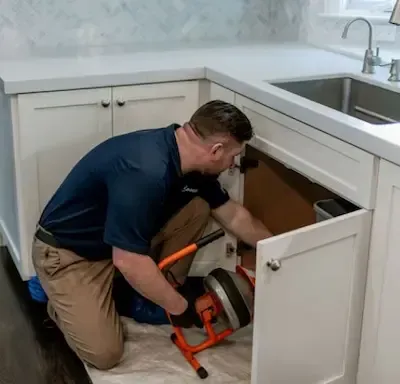
Kitchen Drain Clog Emergency Steps for Bexley OH Homes
A kitchen drain clog in a Bexley OH home needs immediate action to prevent water backup into your sink and potential damage to the drain line. Start by stopping water flow, then work through mechanical methods before calling a plumber. Skip liquid drain chemicals entirely — they rarely dissolve grease and can damage the older cast-iron and galvanized pipes common in Bexley's mid-century housing stock. If water backs up into a second fixture or you notice slow drains throughout the house, the clog has likely reached the main lateral and requires professional clearing.
Step 1: Stop All Water Flow to the Sink
Turn off the faucet and do not run the dishwasher if it shares the same drain line — most kitchen dishwashers in Bexley homes connect directly into the kitchen drain under the sink. Running more water into a blocked line increases pressure and can push grease further into the lateral. Remove standing water from the basin using a cup or small bucket so you can see and access the drain clearly.
Step 2: Clear the P-Trap First
Place a bucket under the curved pipe beneath the sink. Unscrew the slip-joint nuts on either end of the P-trap by hand or with channel-lock pliers. Pull the trap free and empty its contents into the bucket. In many Bexley homes built in the 1940s through 1960s, you may find a galvanized steel P-trap that shows visible scale buildup inside — this narrows the effective diameter and makes grease accumulation worse over time. Clean the trap thoroughly with a bottle brush, then reinstall it snugly before testing.
Step 3: Use a Sink Plunger with a Proper Seal
A cup plunger — not a flange plunger — is the right tool for a flat sink basin. Cover the overflow opening if your sink has one, using a wet rag to maintain suction. Fill the basin with two to three inches of water, position the plunger directly over the drain opening, and push down firmly with ten to fifteen strokes. The pressure differential dislodges soft grease clogs sitting just past the drain collar. Avoid aggressive plunging on older drain assemblies; the slip joints under the sink can loosen if the trap was recently reinstalled.
Step 4: Run a Hand Auger Into the Drain Line
If plunging does not restore flow, feed a hand auger — also called a drain snake — through the drain opening with the P-trap removed. Guide the cable slowly, rotating as you push. Most kitchen clogs in Bexley homes sit within the first four to six feet of drain pipe beyond the trap. When you feel resistance, rotate the auger handle to break up or hook the blockage, then pull the cable back slowly. Run hot water for sixty seconds to flush loosened debris. For Drain Cleaning situations that go beyond a basic hand auger, a power auger or hydro-jet service will be necessary.
Step 5: Avoid Chemical Drain Cleaners in Bexley Pipe Systems
Liquid chemical drain openers rely on lye or sulfuric acid to dissolve organic matter. In Bexley's older housing stock, these chemicals create two problems. First, lye-based products generate heat that can soften PVC couplings used in past repairs spliced onto original cast-iron lines. Second, if the chemical does not clear the clog, it sits in the drain under pressure and creates a hazard when a plumber later opens the line. Enzymatic drain maintenance products are acceptable for monthly preventive use but will not clear an active clog fast enough in an emergency.
Step 6: Check Whether the Clog Has Reached the Main Lateral
Run water in a bathroom sink or flush a toilet while the kitchen drain is blocked. If water backs up into the kitchen drain or you hear gurgling from the floor drain in a basement utility room, the blockage has moved beyond the branch drain into the main lateral that runs beneath the Bexley home toward the street sewer connection. At this point, hand tools will not reach the obstruction. You need a professional with a power auger or hydro-jetting equipment capable of clearing the full lateral run, which in most Bexley neighborhoods measures forty to seventy feet from the house to the street connection.
Step 7: Call a Licensed Plumber When These Signs Appear
Contact a licensed plumber immediately if you observe any of the following: water backing up into a second fixture, sewage odor coming from floor drains, the kitchen drain completely blocked after hand-augering, or visible water under the cabinet indicating a failed slip-joint connection. Review our Bexley drain cleaning overview for a broader look at drain system maintenance across all fixture types in Columbus-area older homes. A plumber can also run a camera through the lateral to confirm whether root intrusion — common in Bexley's tree-lined streets along Drexel Avenue and Maryland Avenue — is contributing to repeated kitchen drain slowdowns.
Preventing Future Kitchen Drain Clogs in Bexley Homes
Grease is the primary cause of kitchen drain clogs in Bexley residential properties. Pour cooled cooking grease into a sealed container and discard it in the trash rather than the sink. Run hot water for thirty seconds after washing greasy pans. Install a basket strainer to catch food solids. If your home is on the older sections of the Bexley sewer grid near Cassingham Road or Capital Street, ask your plumber about the pipe material and diameter during any service visit — cast-iron lines narrowed by decades of scale buildup have significantly less tolerance for grease accumulation than modern four-inch PVC drain runs.
