Pre-Winter Water Heater Check for Bexley OH Homeowners
A pre-winter water heater check in Bexley, OH takes about an hour and can prevent cold-morning failures when demand on your system spikes. The process covers four key tasks: testing the pressure relief valve, inspecting the anode rod, flushing sediment from the tank, and evaluating whether your unit's age and condition justify replacement before winter sets in. Bexley winters push your water heater harder than any other season. Getting ahead of that stress now is simpler and far less expensive than an emergency call in January.
Step 1: Test the Temperature and Pressure Relief Valve
The T&P valve is a safety device that releases pressure if your tank overheats or over-pressurizes. To test it, place a bucket under the discharge pipe, then lift the valve's lever briefly. You should hear a rush of water or steam and see water exit the pipe. If nothing comes out, or if the valve drips continuously after the test, it needs replacement before winter. A failed T&P valve is not a minor issue — it's a safety risk. Replacement is inexpensive when done during a routine service visit rather than during an emergency.
Step 2: Inspect the Anode Rod
The anode rod is a metal rod inside your tank that sacrifices itself to prevent the steel tank walls from corroding. Most manufacturers recommend inspecting it every two to three years. To check it, shut off the cold water supply, attach a 1-1/16 inch socket wrench to the hex head on top of the tank, and carefully remove the rod. If it's less than half an inch thick, heavily coated in calcium, or has long sections of bare wire exposed, replace it immediately. Skipping this step in a Bexley home with hard water is one of the most common reasons tanks fail prematurely.
Step 3: Flush Sediment from the Tank
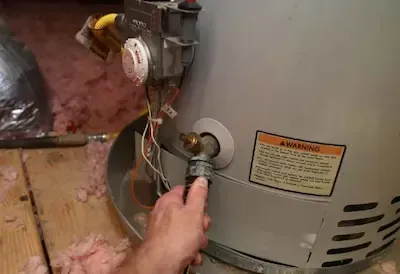
Sediment — primarily calcium and magnesium minerals from Columbus-area water — settles at the bottom of your tank over time. It insulates the burner from the water, forcing the unit to work harder and driving up your gas or electric bill. Flushing takes about twenty minutes. Connect a garden hose to the drain valve at the base of the tank, run the other end outside or to a floor drain, then open the valve and let the tank drain until the water runs clear. Turn the cold supply on briefly to stir up remaining sediment, then drain again. If you haven't flushed in more than two years, expect the first flush to take longer and produce cloudier water. For step-by-step guidance on what to do if something goes wrong during this process, read the Bexley water heater emergency primer before you start.
Step 4: Check the Thermostat and Temperature Setting
Most manufacturers and the U.S. Department of Energy recommend setting your water heater thermostat to 120°F. Settings higher than that increase both energy costs and scalding risk. Settings lower than 120°F can allow bacterial growth inside the tank. Use a thermometer at a hot tap to verify the actual output temperature matches your dial setting. If there's a significant gap between the two, the thermostat is drifting and may need recalibration or replacement. This is a quick check that's easy to overlook but becomes immediately noticeable in winter when household hot water demand rises across Bexley neighborhoods.
Step 5: Evaluate Whether Replacement Makes More Sense
If your water heater is more than ten years old, has visible rust on the tank body, makes loud popping or rumbling noises during heating cycles, or required a repair in the past twelve months, replacement before winter is worth serious consideration. Heating systems across Bexley — including water heaters — face peak demand during the coldest weeks of the year. A unit that's marginal in October is likely to fail in February. Water Heater Repair can resolve many issues, but an aging tank that has already shown multiple warning signs is better replaced than repeatedly patched. A licensed plumber can give you a realistic assessment of remaining service life after the inspection above is complete.
What Does This Check Actually Cost?
If you do the inspection yourself, the cost is primarily your time and any parts you replace — a new anode rod runs $20–$50, and a T&P valve typically costs $15–$40 at a local supply house. If you hire a licensed plumber in Bexley to perform the full service, expect to pay between $100 and $200 for a standard tank flush, inspection, and minor part replacement. That's a straightforward investment compared to an emergency after-hours call in December, which typically runs two to three times that amount before any parts are factored in. Residents in older Bexley homes with aging infrastructure especially benefit from getting this done on a planned schedule rather than waiting for a failure.
